Author name: David Munezero

Uncategorized

From Soil to Table: How Regen-Basket Is Changing Lives in Kampala

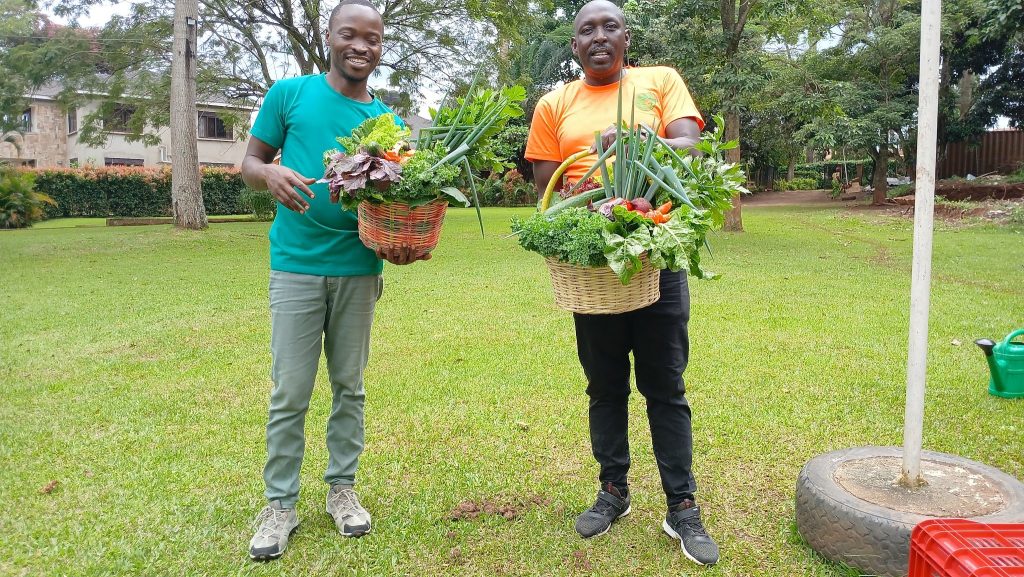
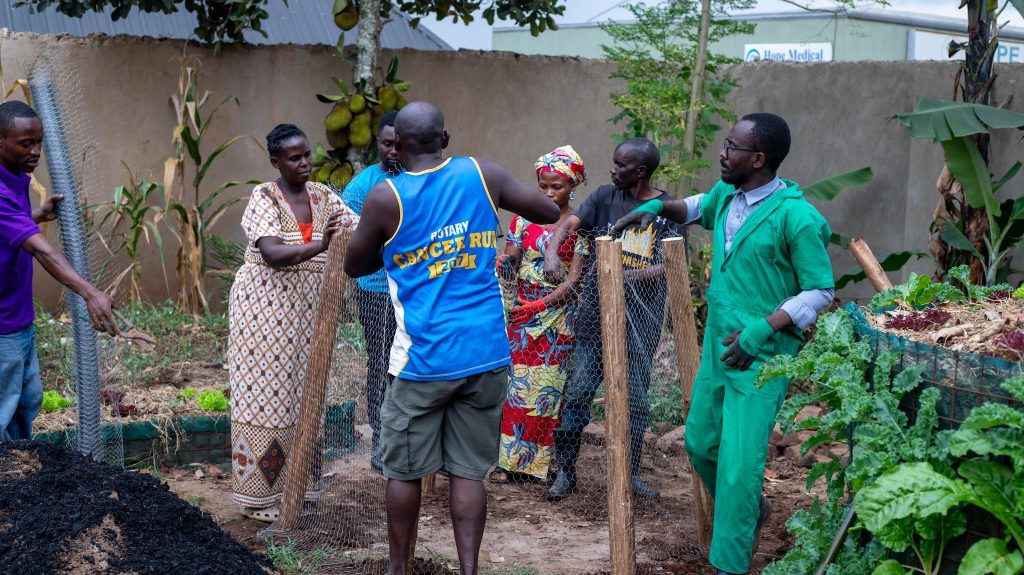
By David Munezero, Founder — Regenerative Life Garden | RegenNow Farms It started with a vote. On a warm December afternoon in 2025, 29 people gathered at Maisha Garden in Kampala — refugees from the Democratic Republic of Congo and Rwanda, Ugandan youth, women who had built new lives from next to nothing. They had come to imagine their future together. And when we gave them each three votes and asked them to name what they needed most, one answer rang louder than all the others. “Livelihoods. Jobs. Income”.  Not charity. Not food aid. Not sympathy. They wanted to work. They wanted to earn. They wanted dignity. That day planted a seed. The Regen-Basket grew from it. The Garden That Changed Everything Before the basket, there was the garden. The Regenerative Life Garden — what we call an RLG — is not grandma’s backyard plot. It is a vertically structured, multi-layered growing system built around an integrated composting core. It can thrive in a space as small as two square metres. It regenerates its own soil. It produces organic vegetables for up to three years without synthetic inputs. It sequesters carbon. It converts kitchen waste into life. We built the first one in Kampala in 2025. Then another. Then four. Then eleven. By early 2026, eleven RLGs had taken root across different Kampala communities — in backyards squeezed between brick walls, in refugee settlements where hope is planted carefully, in the gardens of women who rise before dawn to tend the earth before tending their families. The vegetables grew. The harvests came in — kale and spinach, spring onions and lettuce, tomatoes and carrots, herbs bursting with colour and scent. More than the families could eat. “Surplus.” And surplus, as any farmer knows, is both a blessing and a problem. A Market That Wasn’t Made for Them The conventional food market in Kampala was not built for small-scale organic growers. It was not built for refugee women selling chemical-free vegetables harvested by hand at dawn. It was not built for youth who grow with care and intention but lack the networks, the storage, the transport, the shelf space. The market was built for volume, uniformity, and the lowest possible price. Our farmers did not fit. So we built something new. Something that matched the values of the people growing the food — and the people who would eat it. We called it the “Regen-Basket”.  What Is a Regen-Basket? It is exactly what it sounds like: a beautiful woven basket overflowing with fresh, chemical-free vegetables grown by regenerative farmers in Kampala’s communities. Every Regen-Basket holds the harvest of an RLG — kale and collard greens, red and green lettuce, spring onions, celery, spinach, cucumbers, tomatoes, carrots, cauliflower, beetroot, and more depending on the season and the garden. No pesticides. No synthetic fertilisers. No shortcuts. Just soil, sun, compost, and care. The vegetables are picked fresh. The basket is assembled by the farmer who grew them. And it is delivered free to your door — through our partnership with “Soko Uganda”, who have walked alongside this mission from the very beginning. The customer receives a harvest. The farmer receives income. The ecosystem receives nothing but benefit. The Numbers Behind the Story We launched the Regen-Basket in January 2026. In the months since, 124 baskets have been sold. Twenty-one customers have tasted the difference. Five have already subscribed — committing to a weekly basket, week after week, because the flavour is real, the story is real, and they want to be part of it. Behind every one of those baskets is a person: A Congolese refugee woman who arrived in Uganda with nothing and now harvests vegetables that feed a neighbourhood. A young man who once had no formal employment and now tends an RLG with the precision and pride of a professional grower. Women who were invisible to the formal economy and are now suppliers, producers, earners. Three regenerative farmers — refugees, youth, women — are currently supplying the Regen-Basket. Three people whose income, dignity, and place in the world has quietly, powerfully shifted. That number will grow. Multisolving: One Basket, Many Answers At RLG, we use a framework called the “FLOWER Tool”— developed by Multisolving Institute. It maps eight interlocking dimensions of human and ecological wellbeing: food, livelihoods, health, climate, biodiversity, waste, connection, and resilience. The Regen-Basket touches every single petal. When a customer subscribes to a weekly basket, they are not just buying vegetables. They are: – Feeding their family: organic, nutrient-dense produce (Food & Nutrition) – Creating income: for a refugee or marginalised grower (Livelihoods & Jobs) – Reducing their exposure: to pesticides and synthetic chemicals (Health & Well-being) – Sequestering carbon: through biochar-integrated regenerative growing (Climate Protection) – Protecting biodiversity: by supporting polyculture over monoculture (Biodiversity) – Diverting kitchen waste: into compost that feeds the next harvest (Waste Management) – Building a connection: between urban consumers and the people who grow their food (Connection) – Funding a model: that builds long-term food sovereignty (Resilience) One basket. Eight benefits. One subscription. That is multisolving made tangible. The Person Behind Your Produce There is something we want you to know about the person who packs the basket.  They pour a lot of dedication into quiet, early hours of the day, check the soil, turn the compost, and harvest the produce before the midday heat could wilt the leaves. They arrange the vegetables by hand — not by machine — with an eye for abundance, for colour, for the kind of beauty that says: “I made this, and I am proud of it”. They do not use chemicals. They believe that food should be medicine, not poison; that soil should be richer after a harvest than before it; and that a garden should give back more than it takes. They are part of a movement that started in one small demonstration garden and has already reached eleven communities, 29 representative voices, and 124 baskets delivered to the doors of people

Uncategorized

When 29 People Imagined a Better Future Together

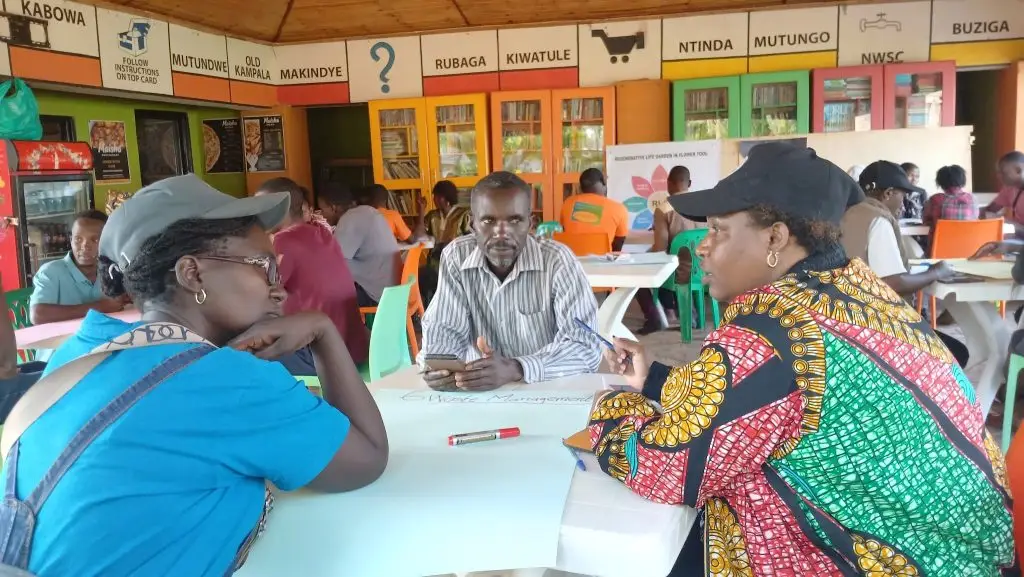
What a single day at Maisha Garden revealed about food, income, dignity, and the regenerative future that communities are ready to build. On 20 December 2025, the Regenerative Life Garden brought together 29 people from 11 communities across Kampala at Maisha Garden — RLG demonstration site in Uganda’s capital. They came from Nsambya and Makindye, from Bakuli and Nabulagala, from Kyebando and Kibuye. Eleven Ugandans. Fifteen Congolese. Three Rwandans. Fifteen women and fourteen men. Strangers who would become, by sunset, a community. This is what we found, and why it matters more than we expected. Participants from 11 Kampala communities arrived at Maisha Garden on 20 December 2025 — many meeting each other for the first time. This Garden Is Never Just a Garden The Regenerative Life Garden began with a conviction: that the crises facing communities like those in Kampala — food insecurity, unemployment, climate vulnerability, waste pollution, loss of biodiversity — are not separate problems. They are one interconnected emergency. And that a single well-designed intervention could begin to address all of them at once. That conviction became the Regenerative Life Garden — a vertical, multi-layered composting-integrated garden system, launched in July 2025 under RegenNow Farms. In a space as small as two square meters, an RLG produces organic vegetables for up to three years. It turns kitchen waste into compost. It sequesters carbon through biochar. It feeds families. It builds soil. And definitely, it can be a source of income. Key Concept RLG is built on a multisolving philosophy-solving many problems at once using one investment and effort. We adapted the Multisolving Institute’s FLOWER framework: eight interconnected petals, each representing a dimension of human and ecological wellbeing. One garden. Eight impacts. All at once. But we needed to know: what do communities actually see in an RLG? What do they need most? What do they hope an RLG would provide? So we asked them. Not through a survey. Through a day-long participatory process — voices, groups, visionings, votes. The Eight FLOWER Petals Livelihoods & Jobs Income generation, poverty reduction, economic dignity Health & Well-being Nutrition, disease prevention, physical and mental wellness Food & Water Organic produce, water conservation, food sovereignty Climate Protection Carbon sequestration, biochar, reduced synthetic inputs Connection Community cohesion, market linkages, knowledge sharing Biodiversity Indigenous crops, soil microbiomes, ecosystem health Waste Management Circular economy, composting, pollution reduction Resilience Coping with displacement, poverty, climate shocks The Day It All Happened The event started with simple introductions. Each of the 29 participants was asked to share three things: their name, their community, and their favorite vegetable. In four languages — English, French, Kinyarwanda, and Swahili — people told each other who they are and where they are from. Francine Lea, a volunteer translator, made sure no voice went unheard. After the introduction, participants went on a garden tour, where they saw and interacted with the Regenerative Life Gardens, transplanted seedlings, and fed the composting area with organic kitchen waste. They also engaged in discussions and asked questions. Participants toured four RLGs and fed the regenerative composting core with organic matter while others were transplanting seedlings.  Eight groups; Eight petals: Projecting into the future After the tour, participants were divided into eight groups randomly assigned by a number draw, to ensure every group had cross-community diversity. Each group was given one FLOWER petal and one question: “Imagine that five years from now, RLG has been established in every home and community. How would this impact the lives of all residents (in line with each petal)? This was the core envisioning question posed to all eight community groups. What followed were communities engaging in serious conversations about their own future — in their own words, in their own languages, on sheets of paper, with no one telling them what to say. Group discussion — people writing on a piece of paper Group discussion — people writing on a piece of paper Group discussion — people writing on a piece of paper Finding presentation:  Each group presented their petal findings to the entire community. The handwritten flip charts are primary data, that is, the community’s vision in their own words. What we gathered were eight visions of one future. The group discussions produced eight windows into how diverse communities understand RLG’s potential.  Livelihoods: Group 8 defined “job” with precision as “an activity one does to earn income in the form of salary and wage” and then identified RLG as a means to earn income. They discussed vegetable sales, knowledge transfer, GDP contribution, and poverty reduction. They also named the notable barriers: high startup costs, limited training, expensive equipment, and government policy restrictions that particularly affect refugee participants. Health and Well-being: Group 2 connected the garden directly to the body, particularly in its potential ability to prevent diseases such as diabetes, cancer, and even malnutrition, and provide weight management through dietary fibre, calcium and vitamins from fresh organic vegetables. They also noted that an RLG could aid social wellbeing as people gather together to garden. Food and Water: Group 5 said what many were thinking but might not have dared to say so directly. They said that, “Water infrastructure is RLG’s most urgent technical challenge. Reservoirs are costly to install. Skills to manage them are scarce. During dry seasons, the gardens are at risk. This is the gap that, if closed through partnership, unlocks everything else”. ⚠️ Critical Gap Identified Water infrastructure is RLG’s most urgent technical and partnership challenge. Solving it simultaneously unlocks food security, biodiversity protection, and climate resilience. This is a true multisolving opportunity for funders and partners alike. Resilience: Group 7 defined their reality plainly: the difficulties highlighted include poverty, climate change impacts, waste, and food insecurity. They mapped RLG to each one on these problems and made a simple and complete conclusion: “With an RLG at home, you cannot lack food.” And to them, that is resilience. The Vote That Changed Everything: After all eight groups presented their discussions, every participant was asked to cast

Scroll to Top