
What a single day at Maisha Garden revealed about food, income, dignity, and the regenerative future that communities are ready to build.
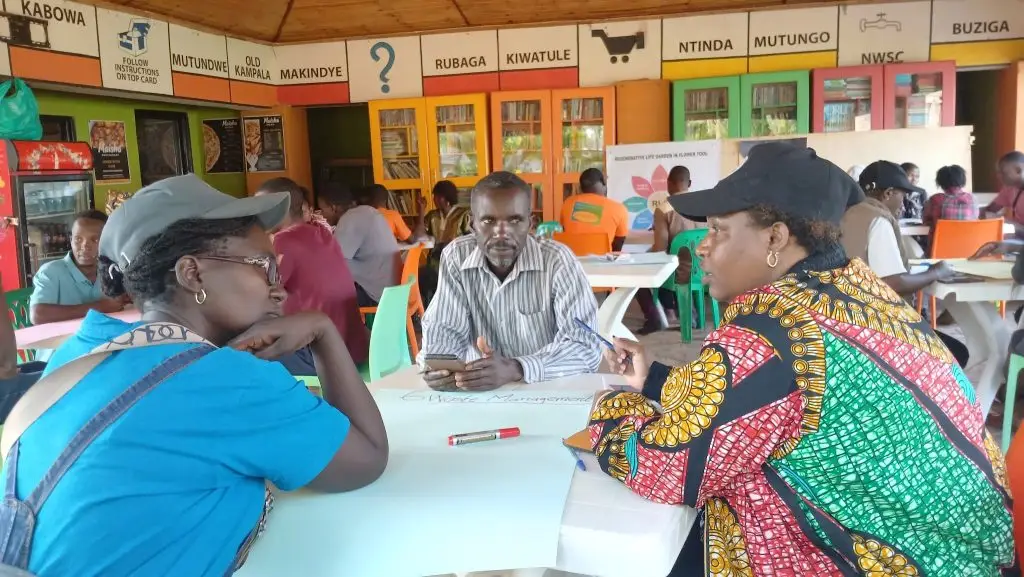
On 20 December 2025, the Regenerative Life Garden brought together 29 people from 11 communities across Kampala at Maisha Garden — RLG demonstration site in Uganda’s capital. They came from Nsambya and Makindye, from Bakuli and Nabulagala, from Kyebando and Kibuye. Eleven Ugandans. Fifteen Congolese. Three Rwandans. Fifteen women and fourteen men. Strangers who would become, by sunset, a community.
This is what we found, and why it matters more than we expected.
Participants from 11 Kampala communities arrived at Maisha Garden on 20 December 2025 — many meeting each other for the first time.
This Garden Is Never Just a Garden
The Regenerative Life Garden began with a conviction: that the crises facing communities like those in Kampala — food insecurity, unemployment, climate vulnerability, waste pollution, loss of biodiversity — are not separate problems. They are one interconnected emergency. And that a single well-designed intervention could begin to address all of them at once.
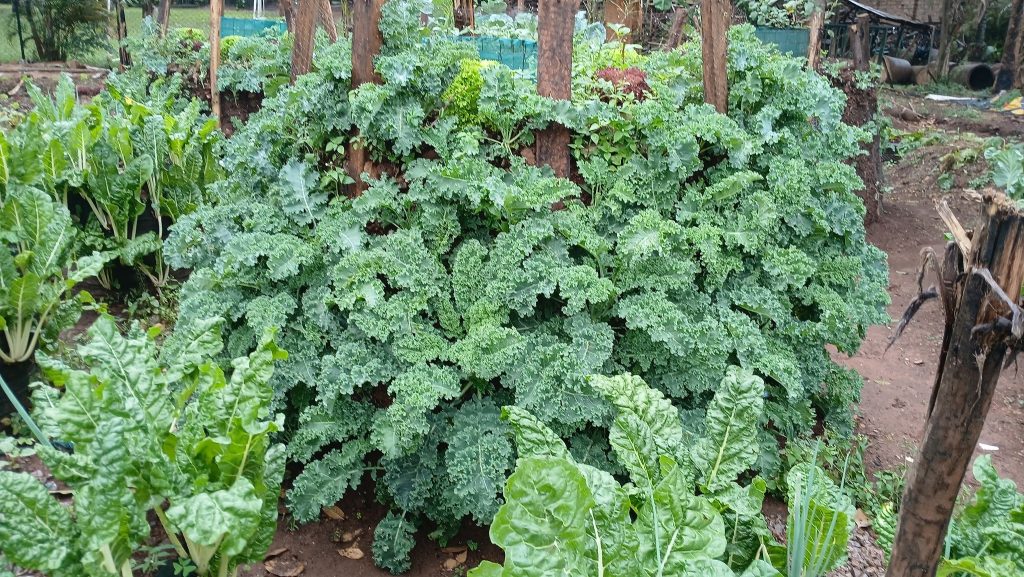
That conviction became the Regenerative Life Garden — a vertical, multi-layered composting-integrated garden system, launched in July 2025 under RegenNow Farms. In a space as small as two square meters, an RLG produces organic vegetables for up to three years. It turns kitchen waste into compost. It sequesters carbon through biochar. It feeds families. It builds soil. And definitely, it can be a source of income.
Key Concept
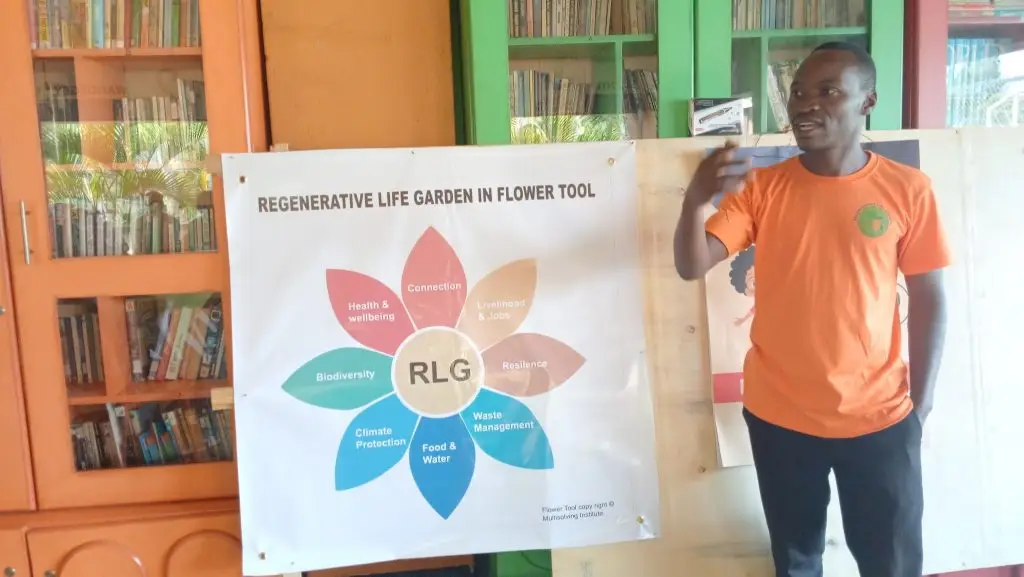
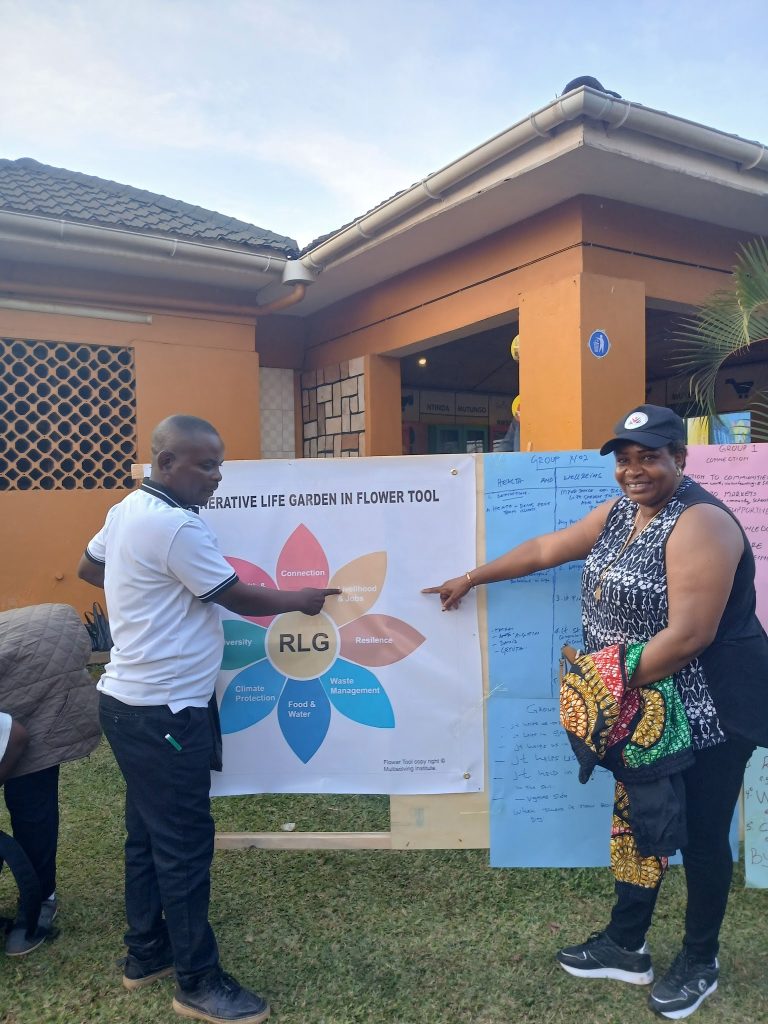
RLG is built on a multisolving philosophy-solving many problems at once using one investment and effort. We adapted the Multisolving Institute’s FLOWER framework: eight interconnected petals, each representing a dimension of human and ecological wellbeing. One garden. Eight impacts. All at once.
But we needed to know: what do communities actually see in an RLG? What do they need most? What do they hope an RLG would provide? So we asked them. Not through a survey. Through a day-long participatory process — voices, groups, visionings, votes.
The Eight FLOWER Petals
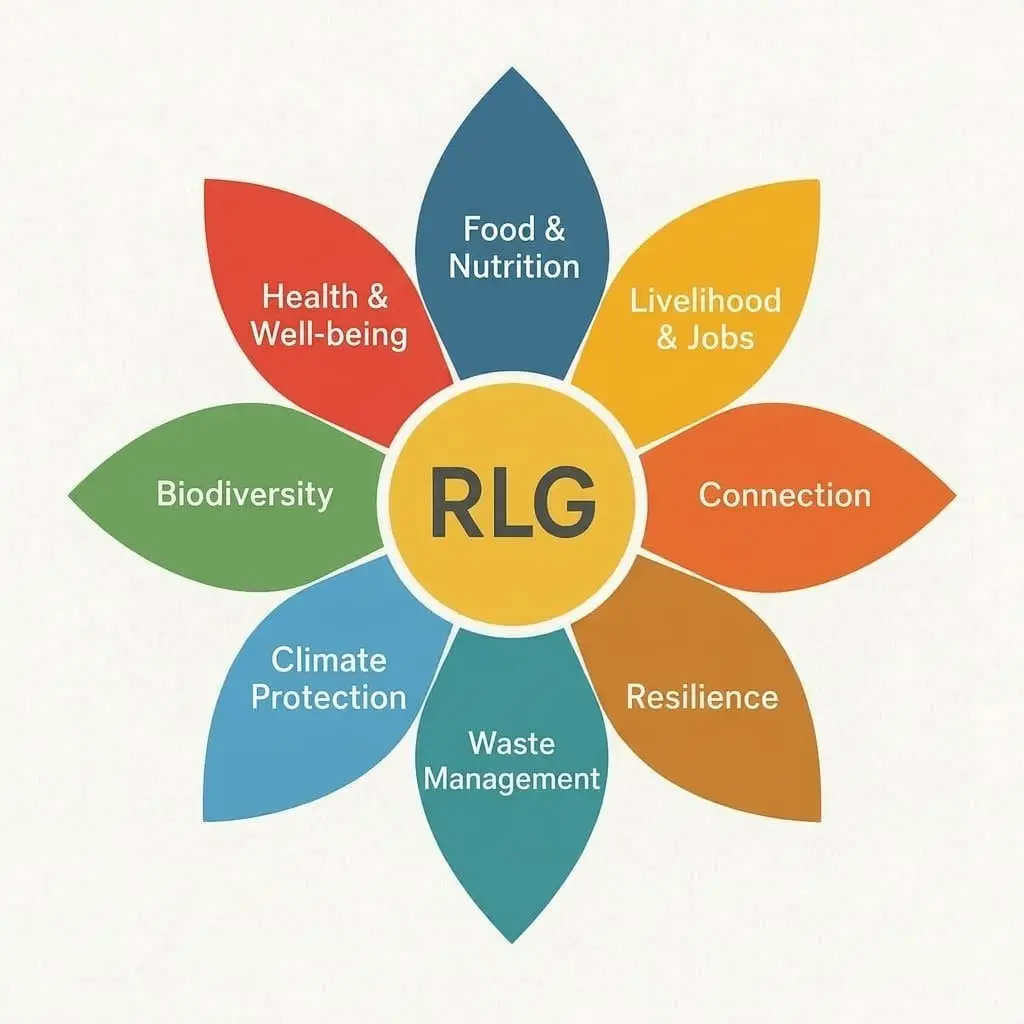
Livelihoods & Jobs
Income generation, poverty reduction, economic dignity
Health & Well-being
Nutrition, disease prevention, physical and mental wellness
Food & Water
Organic produce, water conservation, food sovereignty
Climate Protection
Carbon sequestration, biochar, reduced synthetic inputs
Connection
Community cohesion, market linkages, knowledge sharing
Biodiversity
Indigenous crops, soil microbiomes, ecosystem health
Waste Management
Circular economy, composting, pollution reduction
Resilience
Coping with displacement, poverty, climate shocks
The Day It All Happened
The event started with simple introductions. Each of the 29 participants was asked to share three things: their name, their community, and their favorite vegetable. In four languages — English, French, Kinyarwanda, and Swahili — people told each other who they are and where they are from. Francine Lea, a volunteer translator, made sure no voice went unheard.
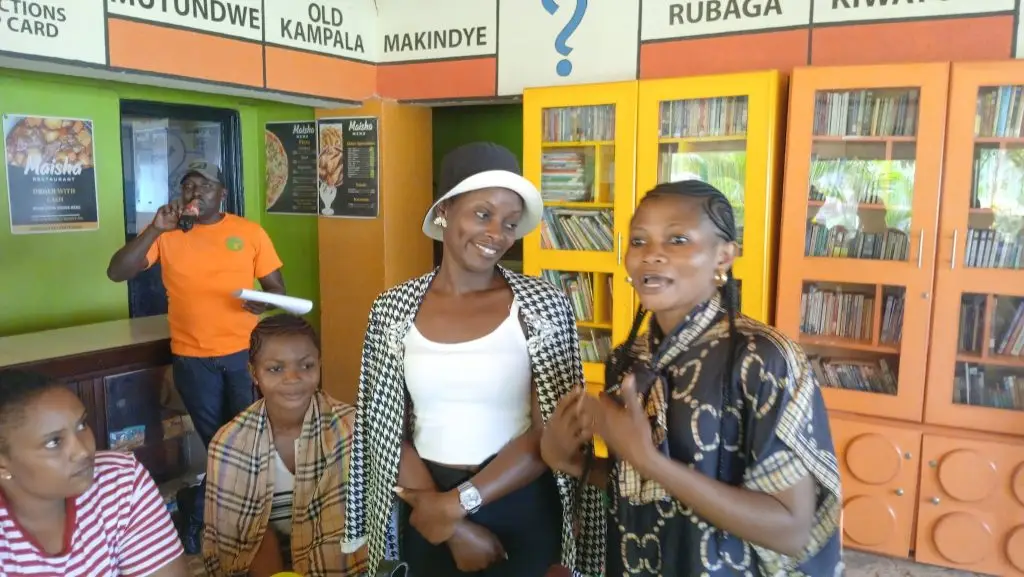
After the introduction, participants went on a garden tour, where they saw and interacted with the Regenerative Life Gardens, transplanted seedlings, and fed the composting area with organic kitchen waste. They also engaged in discussions and asked questions.
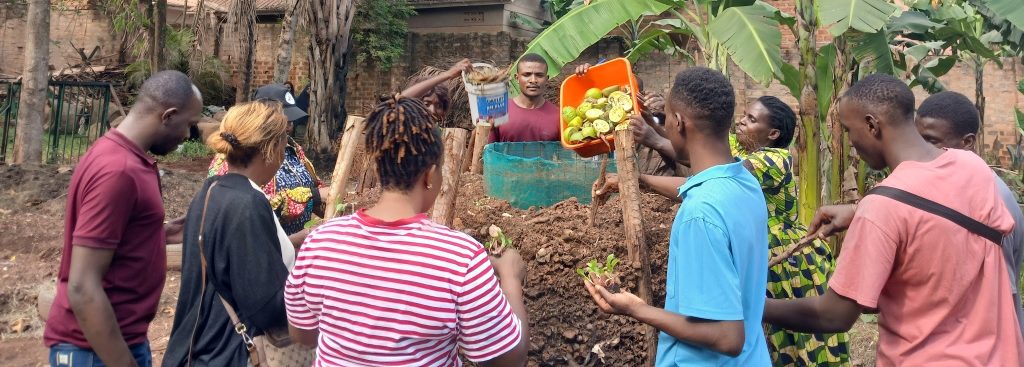
Participants toured four RLGs and fed the regenerative composting core with organic matter while others were transplanting seedlings.
Eight groups; Eight petals: Projecting into the future
After the tour, participants were divided into eight groups randomly assigned by a number draw, to ensure every group had cross-community diversity. Each group was given one FLOWER petal and one question: “Imagine that five years from now, RLG has been established in every home and community. How would this impact the lives of all residents (in line with each petal)?
This was the core envisioning question posed to all eight community groups.
What followed were communities engaging in serious conversations about their own future — in their own words, in their own languages, on sheets of paper, with no one telling them what to say.
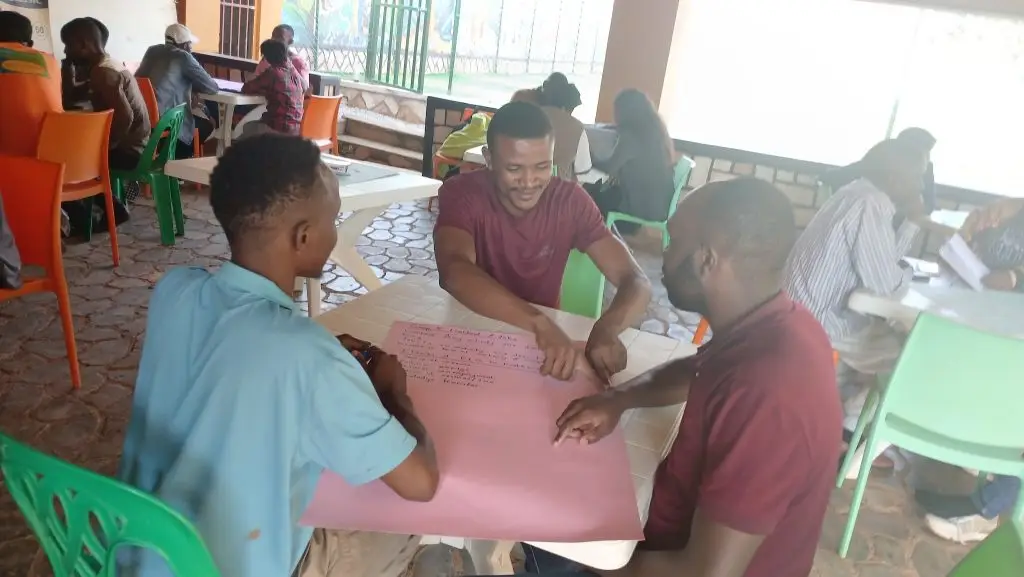
Group discussion — people writing on a piece of paper
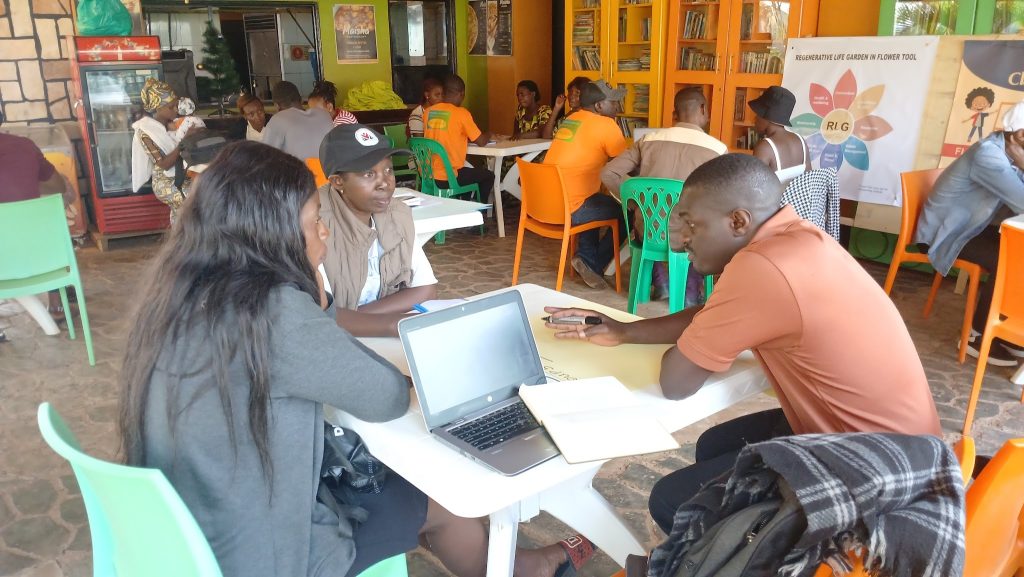
Group discussion — people writing on a piece of pape
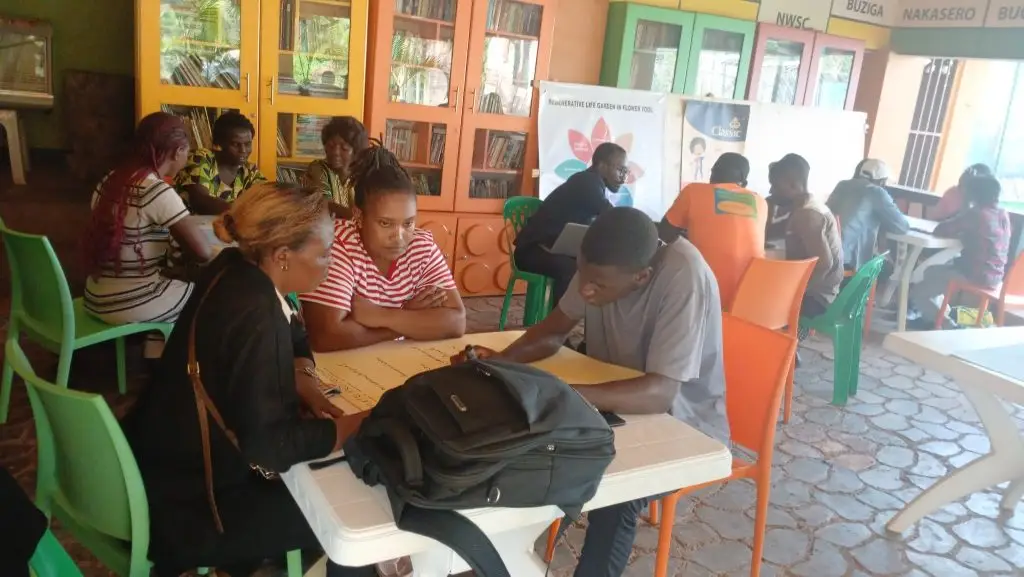
Group discussion — people writing on a piece of paper
Finding presentation:
Each group presented their petal findings to the entire community. The handwritten flip charts are primary data, that is, the community’s vision in their own words. What we gathered were eight visions of one future.
The group discussions produced eight windows into how diverse communities understand RLG’s potential.
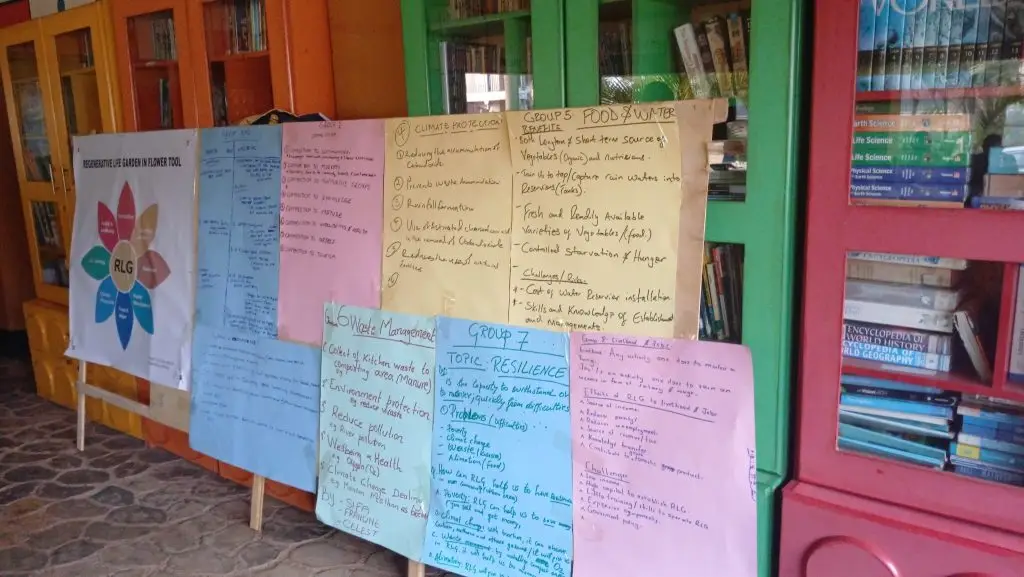
Livelihoods: Group 8 defined “job” with precision as “an activity one does to earn income in the form of salary and wage” and then identified RLG as a means to earn income. They discussed vegetable sales, knowledge transfer, GDP contribution, and poverty reduction. They also named the notable barriers: high startup costs, limited training, expensive equipment, and government policy restrictions that particularly affect refugee participants.
Health and Well-being: Group 2 connected the garden directly to the body, particularly in its potential ability to prevent diseases such as diabetes, cancer, and even malnutrition, and provide weight management through dietary fibre, calcium and vitamins from fresh organic vegetables. They also noted that an RLG could aid social wellbeing as people gather together to garden.
Food and Water: Group 5 said what many were thinking but might not have dared to say so directly. They said that, “Water infrastructure is RLG’s most urgent technical challenge. Reservoirs are costly to install. Skills to manage them are scarce. During dry seasons, the gardens are at risk. This is the gap that, if closed through partnership, unlocks everything else”.
⚠️ Critical Gap Identified
Water infrastructure is RLG’s most urgent technical and partnership challenge. Solving it simultaneously unlocks food security, biodiversity protection, and climate resilience. This is a true multisolving opportunity for funders and partners alike.
Resilience: Group 7 defined their reality plainly: the difficulties highlighted include poverty, climate change impacts, waste, and food insecurity. They mapped RLG to each one on these problems and made a simple and complete conclusion: “With an RLG at home, you cannot lack food.” And to them, that is resilience.
The Vote That Changed Everything:
After all eight groups presented their discussions, every participant was asked to cast up to three votes, choosing which FLOWER petals they most needed RLG to address. The votes were counted openly, in front of everyone, written on a single sheet of paper held up for all to see.
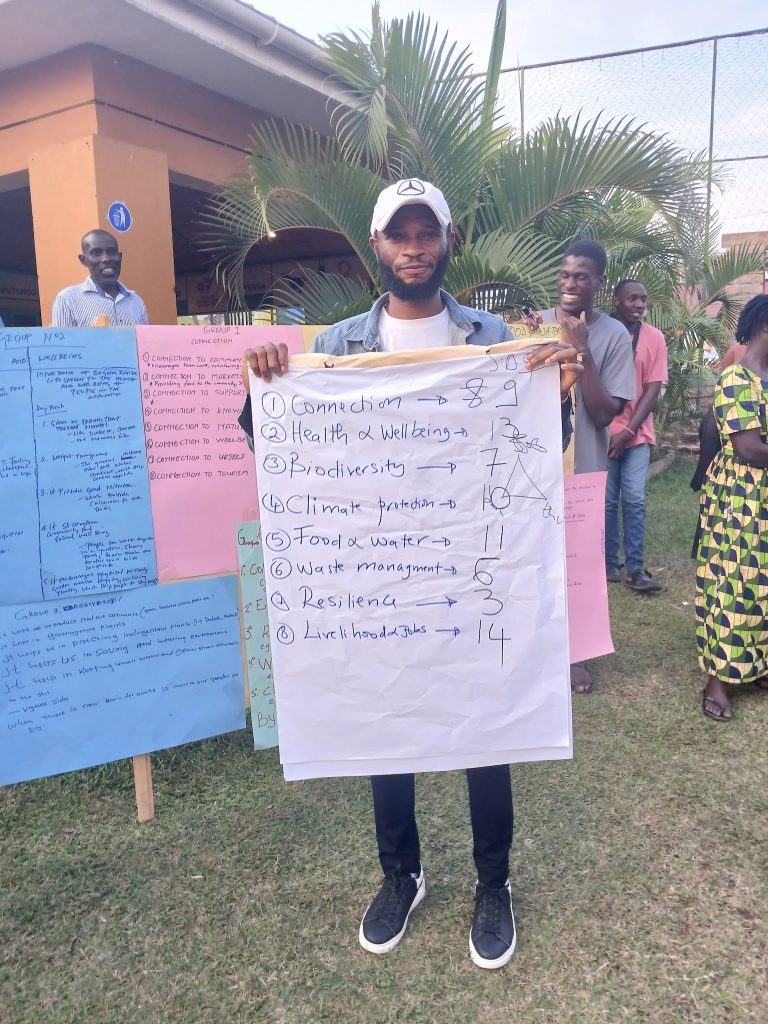
Community Priority Rankings
🥇 Livelihoods & Jobs: 14 votes; 🥈 Health & Well-being: 13 votes; 🥉 Food & Water: 11 votes; Climate Protection: 10 votes; Connection: 9 votes; Biodiversity: 7 votes; Waste Management: 6 votes; and Resilience: 3 votes.
The result was both expected and profound. Livelihoods and Jobs, Health and Well-being, and. Food and Water, together, captured more than half of all the votes cast.
This does not imply that the communities are indifferent to climate, biodiversity, or waste; they care about all of these. But economic survival is the entry point to everything else for them. The message was clear: Any climate solution that does not pay the people will not be adopted by the people who cannot afford to “wait”.
Seeing “Livelihoods” come first did not come as a surprise to me. The people in these represented communities wake up every day wondering how to feed their families and pay their rent at the same time.
— David Munezero, RLG Founder & Lead, RegenNow Farms
The ranking results were counted and announced openly, and their voices unfiltered. At the end of the day before anyone left, participants were asked if they would like to be part of RLG going forward? To our utmost surprise, 19 out of 29 present participants, approximately 65%, signed to be volunteers for, and part of RLG, without any financial incentive promised.
These are people who arrived as strangers, and left as something more unified — co-creators. People who had looked at a garden and seen not just food, but a future worth growing into.
What Comes Next, and Why It Matters to You
This Needs Assessment is a beginning; it is not the end. It has given RLG a clear mandate: design the next phase as a regenerative livelihood system, and not only a food production model. It has confirmed what communities most need, and pointed directly at what will make or break the work ahead.
In the next phase, RLG is committed to:
- Training the 19 new volunteers — in agronomy, composting, and business skills
- Seeking water reservoir partnerships to address the most critical, technical gap
- Connecting RLG produce to markets — schools, hotels, households
- Exploring Community Supported Agriculture (CSA) for stable grower income
- Building monitoring systems to track impact across all eight FLOWER petals
If you believe that climate solutions must also be livelihood solutions, and that food sovereignty and economic dignity are inseparable, this is your moment to be part of something that 29 representative residents of Kampalan communities voted for with their hands, voices, and time.
Read the Full Needs Assessment Report (PDF): https://rlgearth.com/wp-content/uploads/2026/06/RLG_Needs_Assessment_Report_Final.pdf
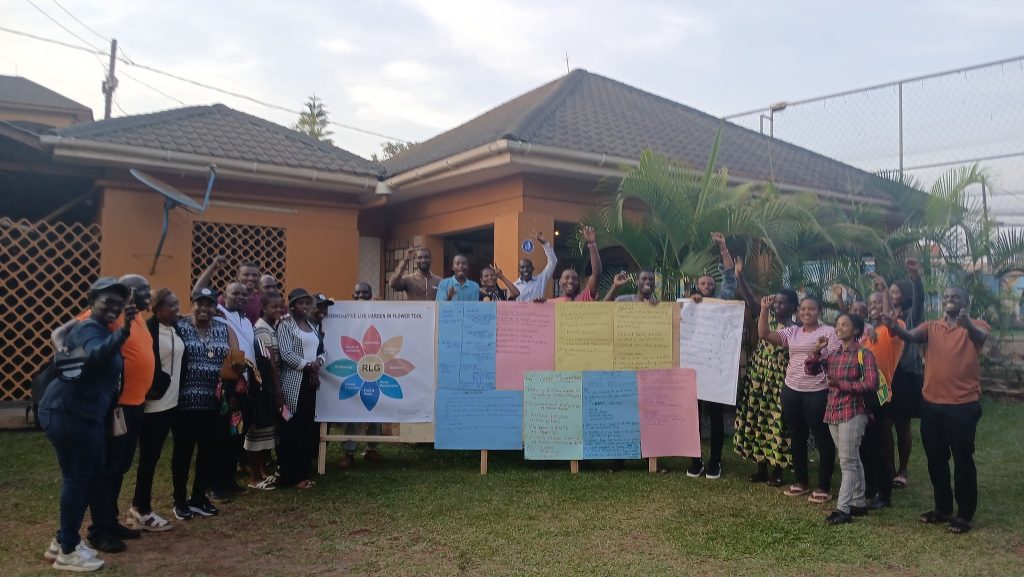
Twenty-nine people. Eleven communities. Three nationalities. One vision. Maisha Garden, Kampala, 20 December 2025.