WHAT IS A REGENERATIVE LIFE GARDEN?
A Regenerative Life Garden is more than a garden.
It is a vertical, multi-layered garden designed for small spaces. At its center is composting area — turning waste into soil. Around it, vegetables grow in layers feeding families.
One garden, multiple solutions
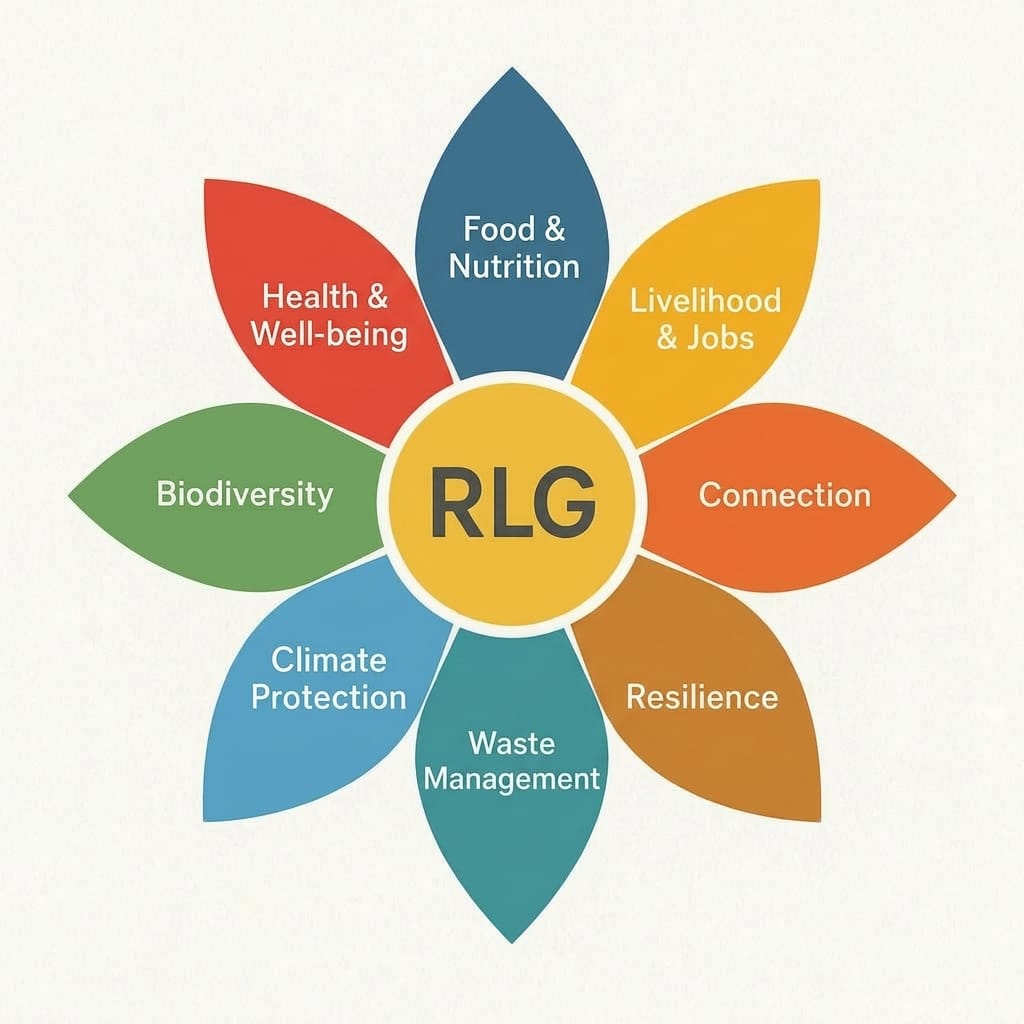
Most gardens just grow food. An RLG does much more — it is deliberately designed so that every element works together, each part strengthening the next. Here’s what it addresses:
- Food security and livelihoods - fresh, organic vegetables grown daily at home reduce dependence on fragile food systems, with surplus available to share or sell
- Soil health and biodiversity — composting and biochar continuously improve fertility, while pollinator-friendly plants support soil life and local ecosystems
- Zero waste — household organic waste becomes compost, turning a problem into a resource
- Carbon sequestration — biochar traps carbon in the soil, improving atmosphere and building long-term soil health
- Community replication — designed to fit any space and be adapted by households, schools, and community settings
HOW IT WORKS
Designed so waste becomes nourishment
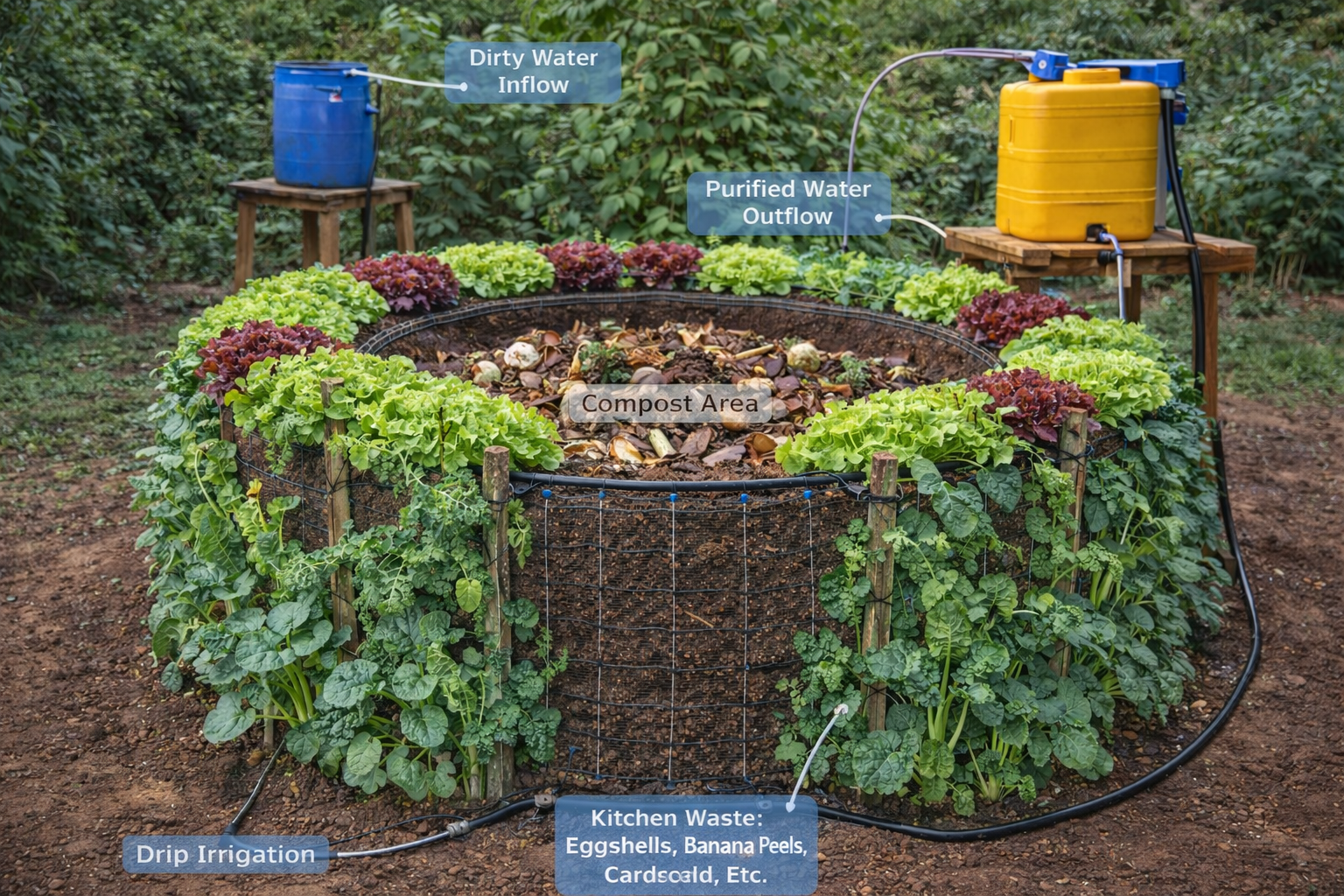
We’ve designed this vertical garden so nothing goes to waste. As shown in the image below – every element feeds back into itself creating nourishment at every level. Nothing in an RLG is wasted. The compost feeds the soil. The soil feeds the plants. The plants feed the family — and the ecosystem.
Vertical layers
Maximizes food production in minimal space, growing leafy greens, herbs, tomatoes, peppers, and legumes
Pollinator plants
Woven through the layers to support biodiversity and soil microbial life
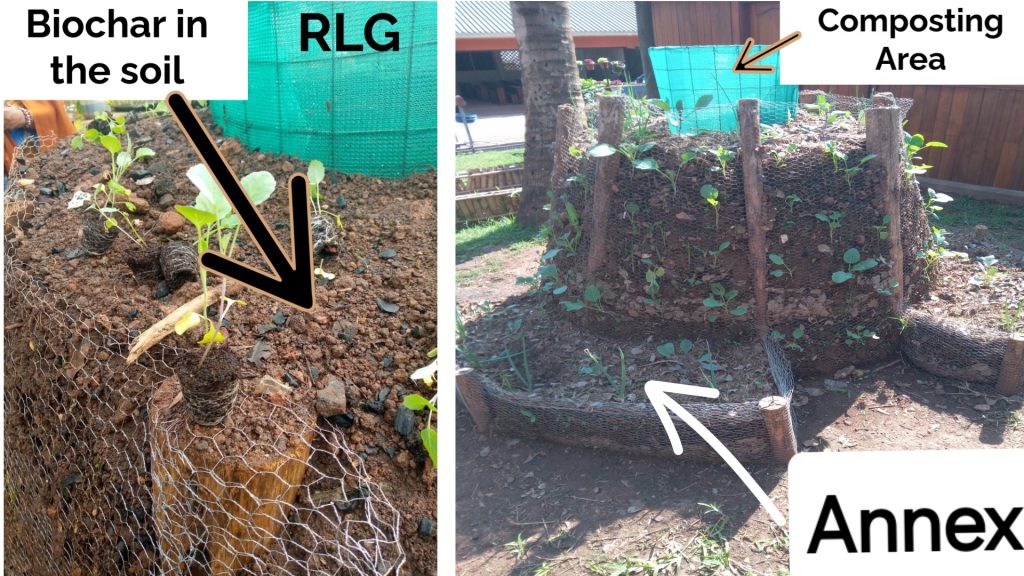
Biochar
Activated and integrated into the soil to store carbon and boost long-term fertility
Composting center
A compositing bin sits at the heart of the garden, turning household organic waste into nutrient-rich soil
How an RLG gets built
Understand the Community
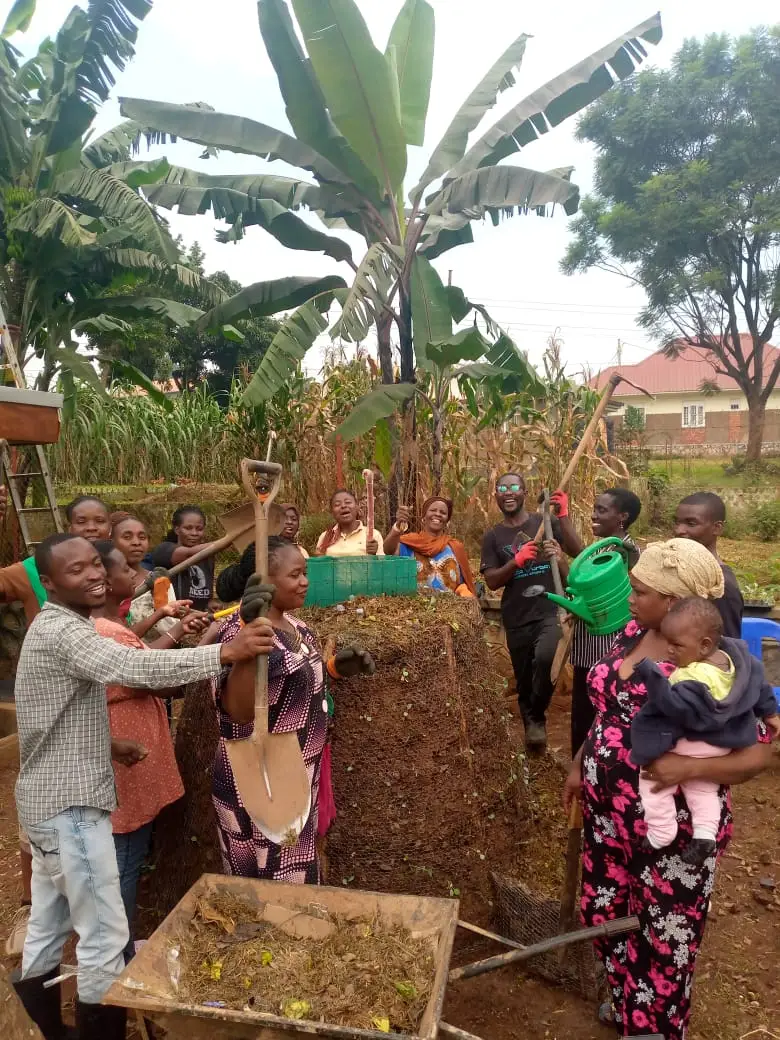
We work with households to learn about daily routines, available space, water access, and local climate to meet real household needs.
Prepare the soil
We improve existing soil with natural amendments, setting up a compost pile, and activating biochar so it enriches rather than depletes the ground.
Design the Garden System
Then we plan the vertical layout to maximize space and ensure the garden is modular and scalable, so households can adjust as needed.
Training & Planting
We teach the family regenerative practices such as layering, composting and biochar use to ensures the system is functional, productive, and resilient.
Set up infrastructure
Transplant crops on top and on the sides, feed composting area with decomposable materials, maintain the garden by preparing and applying pest and disease control products whenever its necessary.
Ongoing Care & Community Support
We provide follow-up guidance, troubleshooting, and encouragement to maintain garden health and encourage replication in neighboring homes.
WHY IT MATTERS
Together, we solve global challenges with local solutions
Across rapidly urbanizing communities in Sub-Saharan Africa, families — including refugees, women, and youth — navigate daily food insecurity, poor nutrition, degraded soils, and environmental stress. These challenges don’t arrive separately. They compound each other.
An RLG is designed to work the same way — solving multiple problems at once, at the household level, with cascading benefits that ripple outward into communities and ecosystems.
One garden doesn’t just feed a family. It restores soil, reduces waste, supports biodiversity, builds confidence, and creates a model that neighbors, schools, and community spaces can replicate. This is what it means to turn daily life into practical climate action — accessible today, not someday.