
From Hunger to Hope: My Journey into the Climate Quest
By David Munezero
“I was born into war, raised by resilience, and today I carry seeds of restoration—not just for myself, but for the world.”
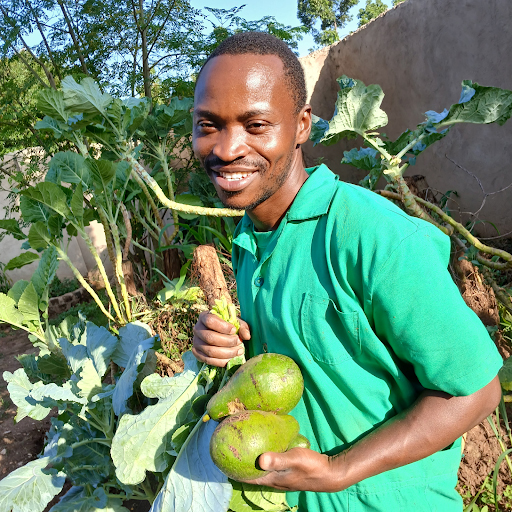
My story begins before I took my first breath.
On August 1st, 1990, my parents married in Ntango, a remote village in western Rwanda, just steps from the tranquil waters of Lake Kivu. Two months later, war erupted. I was still in my mother’s womb when the conflict began. I was born into chaos on April 29th, 1991, and named Munezero “Happiness”, a name carrying hope in a time of despair.
But hardship deepened. In 1994, the Genocide against the Tutsi shattered Rwanda. My family fled to the Democratic Republic of Congo, where we survived in forests and refugee camps. I was only three. Hunger, malnutrition, and disease shaped my earliest memories.
When we returned to Rwanda three years later, we had nothing—no home, no food, no land. My childhood was marked by poverty, hunger, and sorrow. Within that period, Rwanda was named the poorest country in the world. In 2005, I lost my father. I was 14. Two years later, I was the top student in my district. I earned a place at Lycée de Kigali, a prestigious school in the capital. But my district—Nyamasheke—was named the poorest in Rwanda. I often told myself:
“I must be the poorest child in the poorest village of the poorest district in the poorest country in the world.”
Instead of despair, that belief lit a fire in me. A purpose. A vision: to rise not just for myself, but for others.
Seeds of Passion, Paths of Purpose
In 2013, I entered the University of Rwanda to study Dental Therapy through a government scholarship. But after two years, I realized it was my passion. I dropped out and pursued Sociology at Atlantic International University. I couldn’t finish due to financial constraints—but it awakened something in me: a deep desire to understand and transform the roots of suffering I had lived through—hunger, poverty, conflict, and inequality.
That desire found its soil in Uganda, where I live today as a refugee. My life restarted again. I trained in beekeeping, then in organic urban farming. I discovered that agriculture wasn’t just about food—it was about life.
I learned that over 2 billion people globally face food insecurity, and 25,000 die from hunger every day—that’s 17.3 lives lost every minute. In Uganda, 33% of children under five are undernourished. These truths didn’t paralyze me—they propelled me.
I took my urban farming certificate and approached the Jesuit Refugee Service (JRS) in Kampala. A field officer visited my tiny room. I was growing mushrooms and building vertical gardens using waste materials. She was amazed—and connected me to the Livelihoods Coordinator.
That moment changed my life.
Growing with Nothing But Passion: My Time at JRS
I joined JRS with zero budget agriculture—but with relentless dedication.
I began by turning an abandoned waste site into a thriving garden. I became a volunteer trainer, then a consultant. I eventually established the Urban Farming Unit under the Livelihoods Department.
Over the next two years, I:
- Trained over 300 people in urban organic farming
- Taught composting, vertical gardening, nutrition, herbal medicine, compost teas, and Integrated Pest & Disease Management
- Built demonstration gardens at JRS, three community gardens, and 40+ home gardens across Kampala
These experiences weren’t just professional milestones. They were revelations. I saw firsthand how food insecurity, hunger, and malnutrition devastate families. But I also saw how gardens could restore dignity, health, and hope.
And that is where the vision for something greater was born.
RegenIntel Changed Everything
In early 2025, global aid cuts shut down our project. I lost my job—but not my purpose. I founded Happy Life Garden, my own social enterprise.
Then I applied for the RegenIntel Foundations Course. I was accepted. And for 15 weeks, I was reborn.
I learned about the polycrisis—the interconnected web of challenges like hunger, climate collapse, disease, poverty, and conflict. I learned about regenerative agriculture, multi-solving, and systems thinking.
Suddenly, everything I’d lived through made sense. These weren’t isolated problems—they were symptoms of broken systems. What we needed wasn’t just aid or charity—but regenerative systems that restore life across all layers of society.
That’s when the Regenerative Life Garden (RLG) was born.
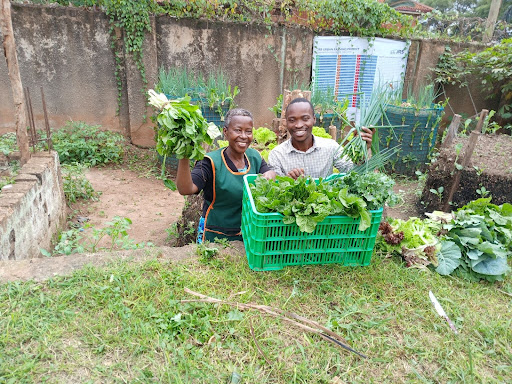
My Climate Quest: The Regenerative Life Garden For Food Security and Climate Action.
The RLG is my living solution to the polycrisis. It’s not just a garden—it’s a multi-solving ecosystem.
A vertical, circular, zero-waste garden with an integrated compost core, the RLG:
- Grows food in small spaces
- Recycles household waste
- Builds soil and captures carbon through the use of biochar
- Supports biodiversity
- Boosts nutrition and community resilience
And it’s adaptable to homes, schools, refugee camps, and cities.
Each RLG can feed a family of 4–6 with daily vegetables for three years, empowering them to regenerate life and nature, combat climate change while securing food, hence helping them meet WHO’s recommended 400 grams of daily vegetables per person. It combines every regenerative technique I’ve learned into one scalable, affordable, and impactful model.
The Climate Quest Pilot: July–December 2025
This 6-month pilot in Kampala is the first step toward a global vision of 1 billion RLGs by 2050.
Here’s what we will do:
- Build a central RLG demonstration site
- Train 40 regenerative gardening champions
- Install 10 RLGs in diverse communities
- Compost 2+ tons of waste
- Produce 250 kg of biochar for soil health and carbon sequestration
- Grow 24 kg of vegetables daily—feeding 80 people
- Track our carbon impact
- Document our journey and create a replicable model
To bring this pilot to life, we need $10,500. But more than money—we need partners, champions, storytellers, and believers.
The Climate Quest Pilot: July–December 2025
From a child shaped by hunger to a man guided by regeneration, this journey has taught me one truth:
“The soil remembers. And it can heal”.
The Regenerative Life Garden is not just about vegetables. It’s about restoring what has been lost: dignity, connection, hope, abundance, balance.
We are not just growing food—we are growing the future.
Join the Climate Quest
Let’s co-create a regenerative future—
One garden. One household. One heartbeat at a time.
David Munezero
Founder, Happy Life Garden
Leader of the Climate Quest